Networked security instead of isolated, standalone solutions
Today, the IT landscape of modern companies consists of a wide variety of different systems. Firewalls, endpoint protection, cloud services, identity management, network monitoring, and security solutions often operate side by side—but not always in tandem.
This is exactly where the concept of a cybernetics cluster comes in.
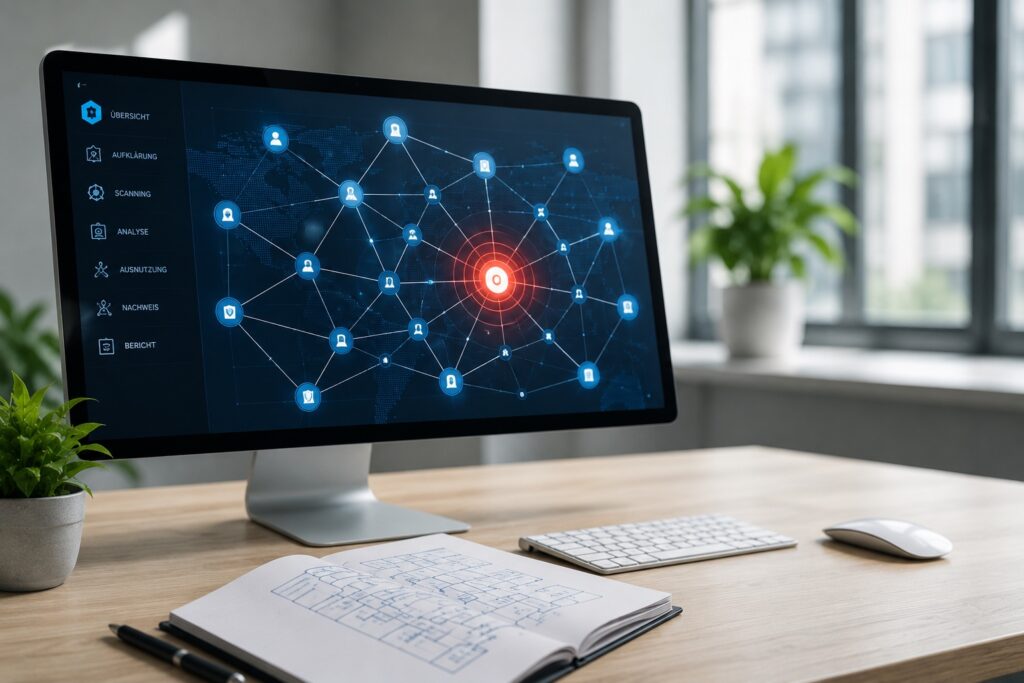
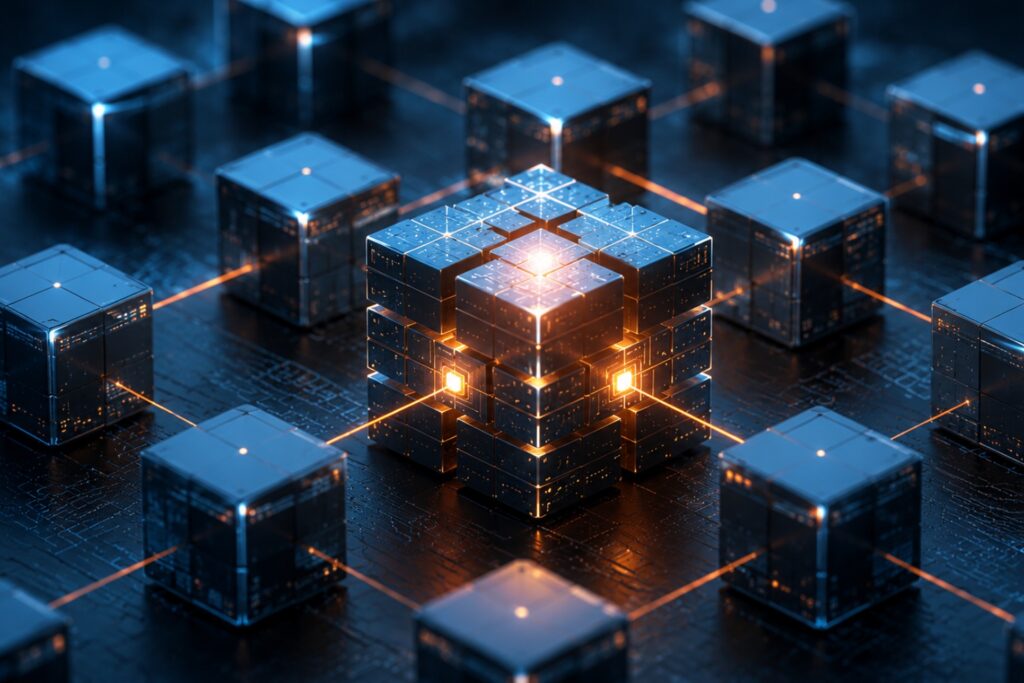
A cybernetics cluster refers to the intelligent interaction of multiple IT and security systems that can exchange information, jointly assess events, and respond automatically to threats. The goal is to detect cyberattacks more quickly, minimize risks, and make security processes more efficient.
What is a cybernetics cluster?
The term is derived from cybernetics —the science of control, regulation, and communication in complex systems.
Applied to IT, this means:
Several security components no longer operate in isolation but form an integrated system.
For example, a cybernetics cluster can connect the following components:
- Firewalls
- Endpoint Detection & Response (EDR)
- Identity and Access Management (IAM)
- Network Monitoring
- SIEM Platforms
- Cloud Security Solutions
- Backup Systems
- AI-powered analytics platforms
- Vulnerability Management
All systems share information with one another and make smarter decisions based on shared data.
Why is this concept becoming increasingly important?
Cyberattacks are becoming increasingly automated and professionally executed.
Attackers often move through networks within a matter of minutes, exploiting multiple vulnerabilities at the same time.
Individual security products often detect only a small part of the overall attack.
A cybernetics cluster, on the other hand, makes it possible to:
- a centralized view of all security-related events
- Faster detection of complex attack patterns
- automated reactions
- shorter response times
- fewer false alarms
This significantly increases the resilience of the entire IT infrastructure.
How does a cybernetics cluster work?
A typical process might look like this:
- An endpoint detects unusual behavior.
- At the same time, the firewall reports suspicious traffic.
- The SIEM correlates both events.
- An AI assesses the likelihood of an attack.
- The affected device is automatically isolated.
- Administrators immediately receive a prioritized alert.
Without networked collaboration, this information would often have to be compiled manually.
Benefits for Businesses
A cybernetics cluster offers numerous advantages:
Faster Attack Detection
Threats are not considered in isolation, but are analyzed within their overall context.
Automated Responses
Many attacks can be stopped before they cause significant damage.
Less manual work
IT departments are relieved of some of their workload because routine tasks are automated.
Greater Transparency
Companies gain a comprehensive overview of the security status of their entire IT infrastructure.
A Better Basis for Decision-Making
Combining different data sources reduces false alarms and improves the quality of security decisions.
The Role of Artificial Intelligence
Modern cybernetics clusters are increasingly relying on AI.
AI systems can detect:
- unusual user activity
- suspicious network activity
- new attack patterns
- Anomalies in User Behavior
- potential insider threats
The more data that can be processed, the more accurate the analyses become.
Applications
Cybernetics clusters are suitable for, among other things:
- small and medium-sized enterprises
- Industry 4.0
- critical infrastructure
- Health Care
- Financial Services Provider
- public institutions
- Companies with hybrid cloud environments
Integrated security architectures are becoming increasingly important, particularly in the context of NIS2, ISO 27001, and growing regulatory requirements.
Challenges During Implementation
Establishing a cybernetics cluster requires careful planning.
Among the most important challenges are:
- Integration of Existing Systems
- standardized interfaces
- Data Quality
- Privacy Policy
- Employee Training
- ongoing maintenance and optimization
Not every solution has to be fully automated. Often, simply connecting existing security components in a smart way is enough.
Conclusion
A Cybernetik cluster is not a single product, but a modern security concept. It integrates various IT and cybersecurity solutions into a single, intelligent system that detects threats more quickly, automatically shares information, and helps companies defend against cyberattacks.
With the increasing digitization, use of the cloud, and application of artificial intelligence, networked security architectures will play an increasingly important role in the future. Companies that intelligently integrate their security solutions lay the foundation for a more resilient, efficient, and future-proof IT infrastructure.
Sources
- Norbert Wiener (1948): *Cybernetics: Or Control and Communication in the Animal and the Machine*. MIT Press.
- NIST – National Institute of Standards and Technology: Cybersecurity Framework (CSF) 2.0. https://www.nist.gov/cyberframework
- European Union Agency for Cybersecurity (ENISA): Threat Landscape Reports. https://www.enisa.europa.eu
- Federal Office for Information Security (BSI): IT-Grundschutz Compendium. https://www.bsi.bund.de
- Federal Office for Information Security (BSI): The State of IT Security in Germany. https://www.bsi.bund.de
- European Union: Directive (EU) 2022/2555 (NIS2 Directive). https://eur-lex.europa.eu
- Microsoft Security: What is SIEM? https://learn.microsoft.com/security
- IBM Security: What is SOAR? https://www.ibm.com/topics/soar
- IBM Security: What is Endpoint Detection and Response (EDR)? https://www.ibm.com/topics/endpoint-detection-response
- CIS – Center for Internet Security: CIS Controls v8. https://www.cisecurity.org/controls